Stainless steel sawtooth dispersion blade on a disperser shaft above an industrial mixing vessel
High Shear. Fast Wet-Out. Built To Last.

Dispersion Blades for Every Mixer and Batch

Sawtooth dispersion blades for paint and coatings producers, ink and pigment processors, adhesive and sealant manufacturers, and chemical batch operations. Precision-machined stainless blades that wet out solids fast and stand up to abrasive millbases.

  • Sawtooth Cowles, high-vane, ring-style and poly designs
  • 304 and 316 stainless, hardened and polyethylene builds
  • Bore-mount with keyway or set screws, or hub-mounted
  • Lab dispersers through full production batch sizes

The fundamentals

What a dispersion blade does

A dispersion blade, also called a Cowles blade or sawtooth blade, is the disc-shaped impeller at the business end of a high-speed disperser. It is a flat plate with teeth bent alternately up and down around the rim, mounted on a vertical shaft and run at high speed inside an open vessel. Its job is not to stir. Its job is to deliver shear: to tear clusters of dry particles apart and drag each particle into contact with the surrounding liquid until the powder is fully wetted out and evenly distributed.

That makes dispersion a different operation from simple mixing. A paddle or propeller blends liquids and moves material around the tank, but pigments, fillers and fumed silicas arrive as agglomerates, clumps of particles held together by surface forces and trapped air, and gentle flow will carry those clumps around intact forever. The sawtooth blade breaks them down mechanically and wets the fresh surfaces so they stay separated in the resin, solvent or water phase.

It is equally distinct from milling. A media mill grinds particles against beads to reach very fine particle sizes; a disperser blade de-agglomerates and incorporates, but it does not fracture primary particles. Many products finish at the disperser. Others use it to prepare a millbase, a premix that then goes on to a mill for the final grind. Either way, the dispersion step sets the ceiling on batch quality, which is why a worn or wrongly sized blade shows up directly in grind readings and cycle times.

Why the blade matters to a buyer

The blade is a consumable, and it is the cheapest component in the dispersion system by a wide margin. Matching the design, diameter and material to the product, and replacing it when the teeth wear, is the least expensive way to buy back batch time on a machine you already own.

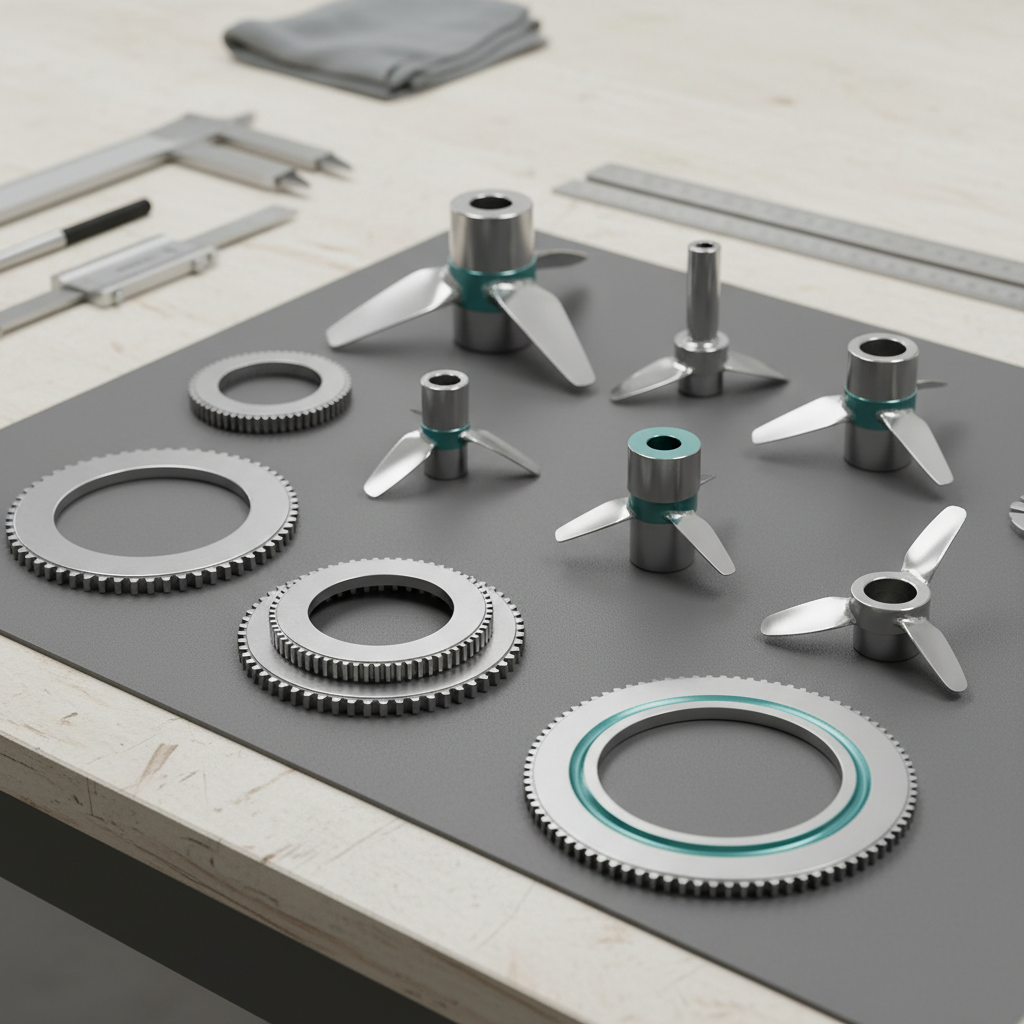
Precision-machined stainless steel sawtooth dispersion blades in different diameters
De-agglomeration
Tooth tips shear pigment and filler clusters apart instead of carrying them around the tank intact.
Wet-out
Freshly separated particle surfaces are pulled into the liquid phase so they stay dispersed.
Distribution
The flow pattern turns the whole batch over so every part of it passes through the shear zone.
Not grinding
Primary particle size is a job for a media mill. The disperser prepares the millbase that feeds it.

The mechanics

How dispersion blades work

Dispersion is specified by tip speed, the peripheral speed of the tooth tips, rather than by rpm. A commonly quoted working range for sawtooth blades is roughly 4,000 to 5,200 feet per minute at the rim. Because tip speed is circumference times shaft speed, a small blade has to turn far faster than a large one to do the same work, which is why disperser drives are variable speed and why blade diameter and rpm are always chosen together.

Run at speed in a properly proportioned vessel, the blade pulls material down onto the disc from above, throws it outward to the wall, and rolls it back to the surface, producing the characteristic doughnut flow pattern with a modest vortex at the shaft. That rolling doughnut is the visual signature of a well-set-up disperser: it means the whole batch is circulating through the high-shear zone at the blade. A batch that is geysering, splashing or sitting still at the wall is telling you the geometry or the speed is wrong.

The shear itself happens at the teeth. Each tooth is a small, blunt hydrofoil moving very fast through the material, creating steep velocity gradients, localized turbulence and impact right at the rim. The alternating up-and-down tooth pattern extends that shear zone above and below the disc. Tooth shape and count are where manufacturers differentiate their designs, trading shear intensity against pumping and wear.

Geometry follows rules of thumb: a blade around one third of the vessel diameter, mounted roughly half to one blade diameter off the vessel bottom, with enough batch depth to cover the blade well. And the process has honest limits. As viscosity climbs, an open sawtooth blade eventually just carves a cavity in the batch and spins in it; that is when high-vane designs, multi-shaft machines or a different mixer take over. And when the product needs a finer grind than shear alone can deliver, the disperser hands the millbase off to a media mill.
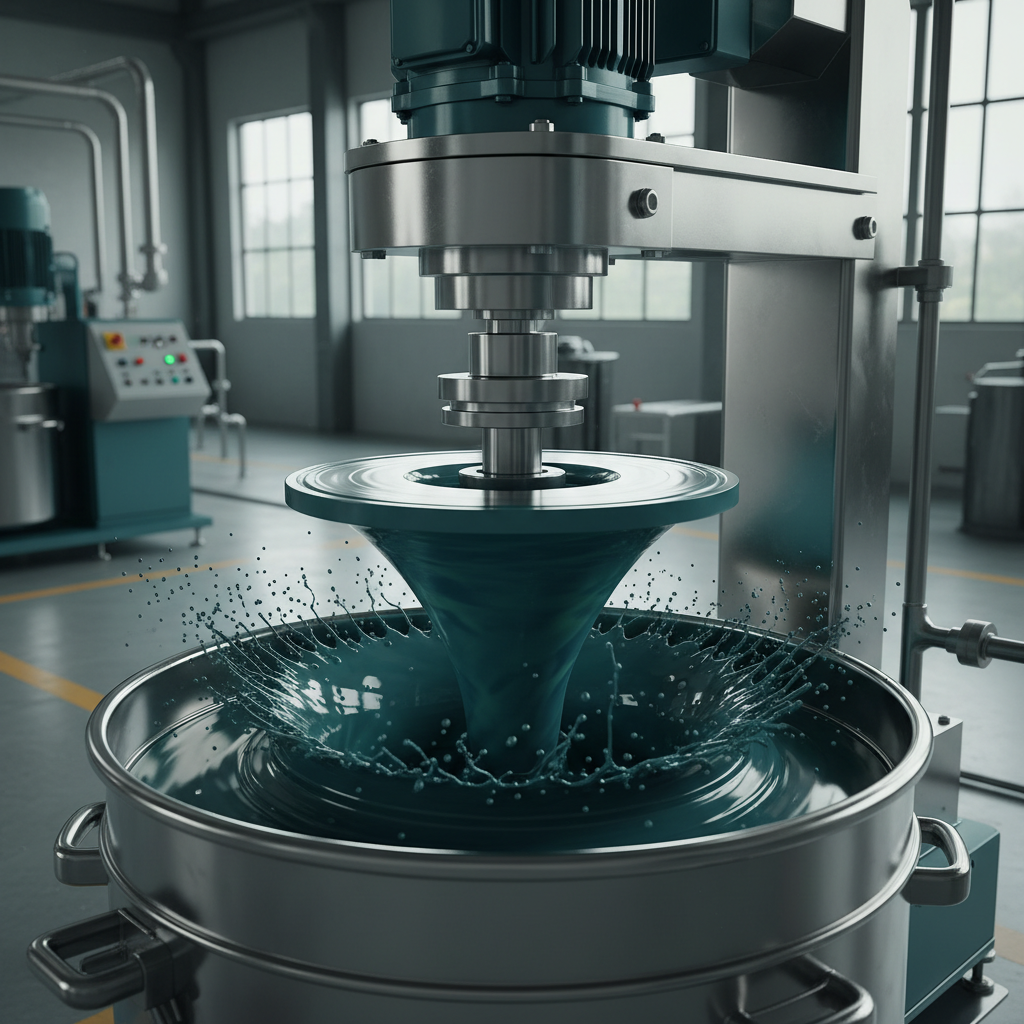
Doughnut flow pattern and vortex around a sawtooth dispersion blade running in a mixing vessel
Tip speed
Roughly 4,000-5,200 fpm at the tooth tips for dispersion work. Diameter and rpm are chosen as a pair.
Doughnut flow
Material rolls from the surface to the blade and back, passing every part of the batch through the shear zone.
Tooth geometry
Alternating teeth create intense localized shear at the rim. Tooth style trades shear against pumping.
Know the limits
Very high viscosity calls for high-vane or multi-shaft designs; finer grinds move on to a media mill.

The lineup

Blade types

Four families cover most dispersion work. They share the same principle, shear delivered at a toothed rim; what changes is the tooth geometry, the pumping behaviour and the material the blade is made from.

Assortment of dispersion blade designs including sawtooth, high-vane and ring-style impellers

Standard Sawtooth / Cowles

The general-purpose dispersion blade

  • The classic design: a flat disc with teeth bent alternately up and down around the rim.
  • The default for paints, coatings, inks and most powder-into-liquid dispersion work.
  • Good balance of shear and turnover across low to medium viscosities.
  • Widely available in standard diameters from every blade manufacturer, so replacements are easy to source.

High-Vane / Pumping Designs

More flow for heavier batches

  • Taller vanes or folded teeth act as blades as well as shear elements, moving more material per revolution.
  • Keeps higher-viscosity batches turning over where a standard sawtooth blade would carve a cavity and spin in it.
  • A common choice for adhesives, sealants, mastics and thick pastes.
  • Trades a little shear intensity for a lot of circulation; some plants run one on the same shaft as a sawtooth blade.

Ring-Style Blades

Finer dispersion, less splash

  • The teeth work inside or against a ring, forcing material through a more confined shear zone.
  • Tends to produce a finer, more uniform dispersion than an open blade at comparable speed.
  • Reduced splashing, vortexing and air entrainment, which matters for foam-sensitive products.
  • A step up for inks, pigment concentrates and quality-critical coatings before committing to a media mill.

Polyblades / PE Blades

Non-sparking, non-contaminating

  • Machined from polyethylene rather than steel, usually in thicker sections for stiffness.
  • Non-sparking around flammable solvent vapours and forgiving on vessel walls and liners.
  • No metal wear particles shed into contamination-sensitive products.
  • Check solvent compatibility and temperature limits for the formulation; poly is a deliberate choice, not a cheap substitute.

Fit and mounting

Bore-mount, shaft-mount and diameters

Most replacement blades are bore-mounted: a machined centre hole slides over the disperser shaft and is secured with a keyway, set screws or a threaded arrangement, depending on the machine. Others are supplied as hub or shaft-mounted assemblies, welded or bolted to a hub that fits a specific drive. The bore diameter, keyway dimensions and fastening style have to match your shaft exactly, so measure the shaft or quote the mixer make and model when ordering.

Diameters run from small lab blades of an inch or two, used on bench dispersers for formulation work, up to large production blades well over a foot across on tank-scale machines. Because tip speed scales with diameter, a replacement in a different size than the original changes the operating speed the machine should run, not just the fit.

Where they work

Applications

Wherever a powder has to disappear into a liquid quickly and completely, there is a sawtooth blade doing the work. These are the industries that wear them out.

Industrial mixing vessels dispersing pigment into liquid in a coatings production plant

Paints & Coatings

The home territory of the Cowles blade: dispersing pigments, extenders and fillers into resin and letdown solvents, and preparing millbases for finer grinds. Titanium dioxide and silica-heavy formulations are hard on teeth, so blades here are true consumables.

Inks & Pigment Concentrates

High pigment loadings and demanding fineness targets. Ring-style blades and careful tip-speed control earn their keep, and poly blades appear where solvent flammability or metal contamination is a concern.

Adhesives & Sealants

Thick, sticky batches that stop turning over long before they stop needing shear. High-vane and pumping designs, often on multi-shaft machines alongside an anchor, keep these products moving.

Construction Chemicals & Grouts

Cementitious additives, plasters, levelling compounds and filled grouts: dense, abrasive mineral loadings that reward hardened or heavier-section blades and honest wear inspection schedules.

Cosmetics & Personal Care

Creams, gels and pigment-loaded pastes where wet-out has to be complete without whipping air into the product. Controlled speeds and reduced-splash blade designs are typical.

Food & Pharma Slurries

Sanitary duty: polished 316 stainless blades, crevice-free mounting and finishes chosen for cleanability and inspection. The dispersion job is the same; the documentation and surface requirements are not.

Specifying an order

Selecting a dispersion blade

A blade quote is only comparable to another blade quote when both describe the same blade. These are the points that define what you are actually buying, and the honest guidance that goes with each.

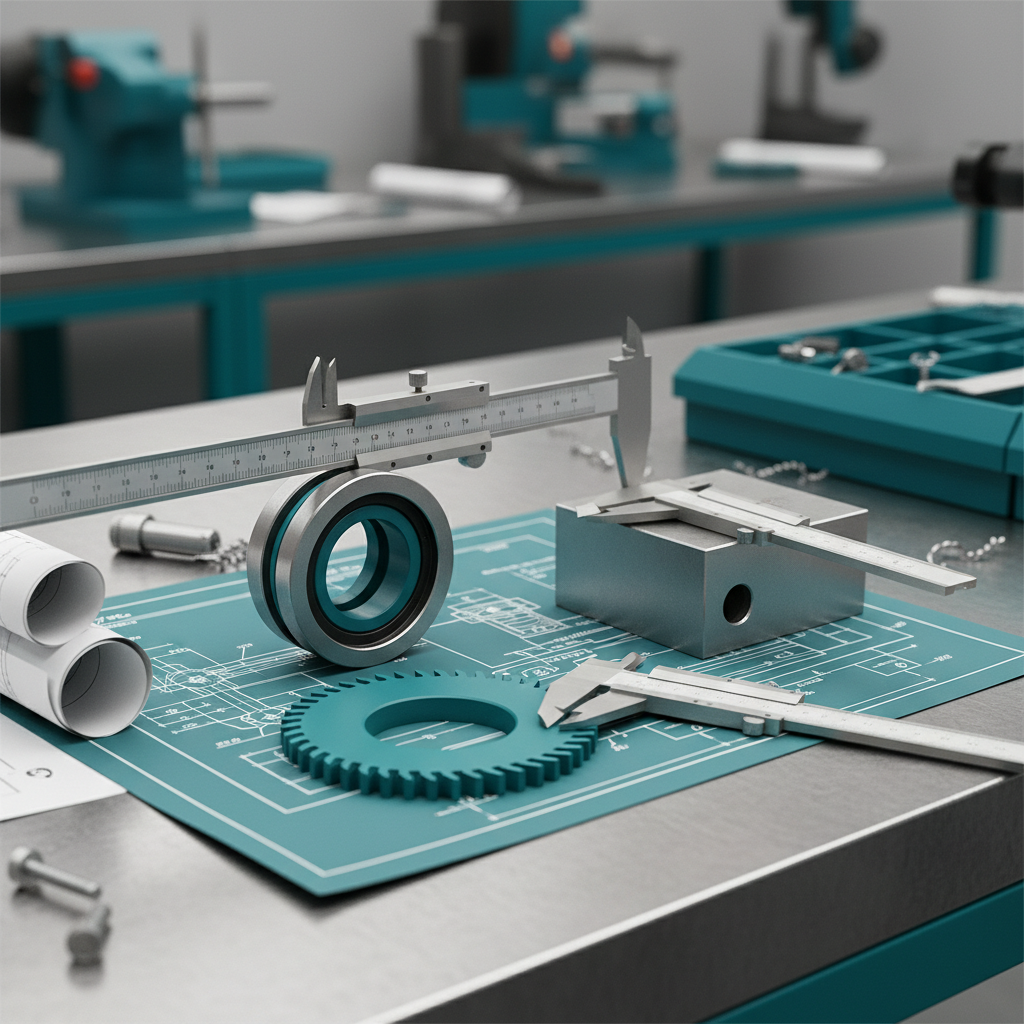
Engineer measuring a sawtooth dispersion blade and checking bore dimensions against a specification sheet
Key dispersion blade specifications, what each one governs, and what to watch for
SpecificationWhat it governsWhat to watch for
Blade diameterSets the shear zone size relative to the vessel and, with rpm, the tip speed. Rule of thumb: about one third of the vessel diameter.Size to the vessel and batch range you actually run, not to the biggest blade the shaft will take. An oversized blade in a small batch splashes and aerates; undersized, it stirs the middle and leaves the wall untouched.
Bore size & keyway vs shaft mountHow the blade fixes to the disperser: a machined bore with keyway or set screws, or a hub assembly for a specific machine.The bore, keyway and fastening must match the shaft exactly. Measure the shaft or give the mixer make and model; a blade that almost fits is scrap.
Material304 or 316 stainless for general and corrosive duty, hardened or wear-resistant constructions for abrasive millbases, polyethylene for non-sparking or contamination-sensitive work.316 costs a little more than 304 and buys corrosion headroom. Choose poly for a reason, spark risk, metal-free product, vessel protection, and confirm solvent and temperature compatibility.
Tooth styleThe tooth pattern determines the balance between shear intensity, pumping action and wear life.Manufacturers' patterns differ, and a like-for-like replacement of the pattern already proven on your product is the low-risk choice. Change style deliberately, to fix a defined problem, not incidentally.
Tip speed & motor matchThe blade diameter and the drive's speed range together set achievable tip speed, and the motor must hold that speed under load.Check that the target tip speed, commonly in the region of 4,000-5,200 fpm, is reachable at your batch viscosity without stalling or overloading the drive. A bigger blade on the same motor is not a free upgrade.
Viscosity rangeWhether an open sawtooth blade will keep the batch turning over, or a high-vane, dual-blade or multi-shaft arrangement is needed.If the batch stops rolling and the blade is spinning in a cavity, no amount of speed fixes it. Describe your heaviest product honestly when specifying.
Abrasion resistanceHow the blade stands up to hard fillers and pigments: heavier sections, hardened materials or wear-resistant treatments.Abrasive millbases turn blades into consumables. Weigh the premium for a harder blade against how often a standard one needs replacing, and track grind times to catch wear early.
Sanitary & finish requirementsSurface finish, polish, crevice-free mounting and material certificates for food, pharma and cosmetic duty.Sanitary is a documented specification, not a shiny surface. State the standard you need to meet and ask for the paperwork with the quote.

Dimensions, materials, speed ratings and mounting details vary between manufacturers and machines. Work from your supplier's specification sheet and your mixer manufacturer's documentation for the exact blade being quoted rather than from generic figures.

Common questions

Dispersion blade FAQ

What is the difference between a dispersion blade and a propeller?

They do different jobs. A propeller or other axial impeller is a pumping device: it moves large volumes of liquid at relatively low speed and low shear, which is what you want for blending, dilution and dissolving easy solids. A sawtooth dispersion blade is a shear device: it runs at much higher speed and converts motor power into intense mechanical shear right at the tooth tips, which is what breaks pigment agglomerates apart and wets dry powder into liquid. A disperser blade is a comparatively poor pump and a propeller is a very poor disperser, so plants that need both flow and shear often run both, either as separate mixers or on a multi-shaft machine.

What is a Cowles blade?

Cowles blade is industry shorthand for the classic sawtooth high-speed disperser blade, named after the Cowles dissolver machines that made the design standard in the paint industry. The terms Cowles blade, sawtooth blade, dissolver blade, high-speed disperser blade and dispersion blade all describe the same family: a flat disc with teeth bent alternately up and down around the rim. Manufacturers each have their own tooth patterns and proprietary variations, but if a supplier quotes you a Cowles-style blade, they mean this general design.

How do I size a dispersion blade to my tank?

The common rule of thumb is a blade diameter of roughly one third of the vessel diameter, with the blade positioned about half a blade diameter to one blade diameter off the bottom of the tank and enough material in the vessel to cover the blade properly, typically with a liquid depth in the region of twice the blade diameter. Those ratios give the doughnut flow pattern room to develop. They are starting points rather than laws: batch viscosity, vessel shape and how full the vessel runs all shift the answer, so confirm the sizing against your actual vessel and batch range with the blade supplier.

What tip speed should a disperser blade run?

Dispersion work is usually specified by peripheral tip speed rather than rpm, because a small blade must spin much faster than a large one to do the same work. A commonly quoted working range for sawtooth blades is roughly 4,000 to 5,200 feet per minute at the tooth tips. Tip speed is the blade circumference multiplied by shaft rpm, so once you know the target tip speed and the blade diameter you can work out the rpm your drive needs to deliver. Operators often run slower while adding powders to keep the vortex controlled, then bring the blade up to full dispersing speed once everything is incorporated.

When do I need a ring-style blade?

Consider a ring-style design when a standard open sawtooth blade disperses your product but not finely or cleanly enough. Ring blades surround the teeth with a ring structure, so material is sheared as it passes through a more confined zone. In practice that tends to give a finer, more uniform dispersion, with less splashing and less air drawn into the batch than an open blade running hard. They are a common step up for inks, pigment concentrates and higher-quality coatings, and can postpone or sometimes remove the need to send a product on to a media mill.

Should I buy a stainless steel or a polyethylene blade?

Stainless steel, usually 304 or 316, is the default: it is stiff, durable, tolerates heat and cleaning chemicals, and 316 adds corrosion resistance for harsher chemistries. Choose a polyethylene blade for specific reasons rather than price: poly blades are non-sparking, which matters around flammable solvent vapours, they will not shed metal wear particles into contamination-sensitive products, and they are forgiving if the blade ever contacts the vessel wall. The trade-offs are lower stiffness, lower temperature limits and possible swelling in some solvents, so check chemical compatibility for your formulation before committing.

How long do dispersion blades last, and what does wear look like?

There is no fixed lifespan, because wear rate depends almost entirely on what you disperse and how hard you run. Abrasive millbases built on materials like titanium dioxide or silica sand the teeth down surprisingly quickly, while easy resins and soft pigments barely mark a blade. The signs are consistent: teeth that have gone rounded and blunt, a rim that is visibly thinned or scalloped between teeth, batches that take longer to reach the same fineness of grind, and more heat generated for the same result. A worn blade quietly costs you cycle time and energy, so most plants keep a spare on the shelf and swap when grind times start drifting.

Contact

Get a Quote

Send the basics of what you run and we will point you in the right direction: blade diameter, bore or shaft details, the vessel and batch size, what you disperse, and how many blades you need.

Replacing a worn blade

Matching diameter, bore, keyway and tooth style to the blade coming off the shaft, or to the mixer make and model.

Matching blade to product

Working out material and tooth style from viscosity, abrasiveness and any spark or contamination constraints.

Upgrading blade style

Whether a high-vane, ring-style or poly design would fix a turnover, fineness or aeration problem you are living with.

We use what you submit to respond to your enquiry, which can include sharing it with suppliers who can quote your request. We never sell your information. See our privacy notice.